December – FebruaryWhat to see in winter
These are the places the prefecture pages name for this season. Each one links to its own page, with opening times, prices and a MAP button.
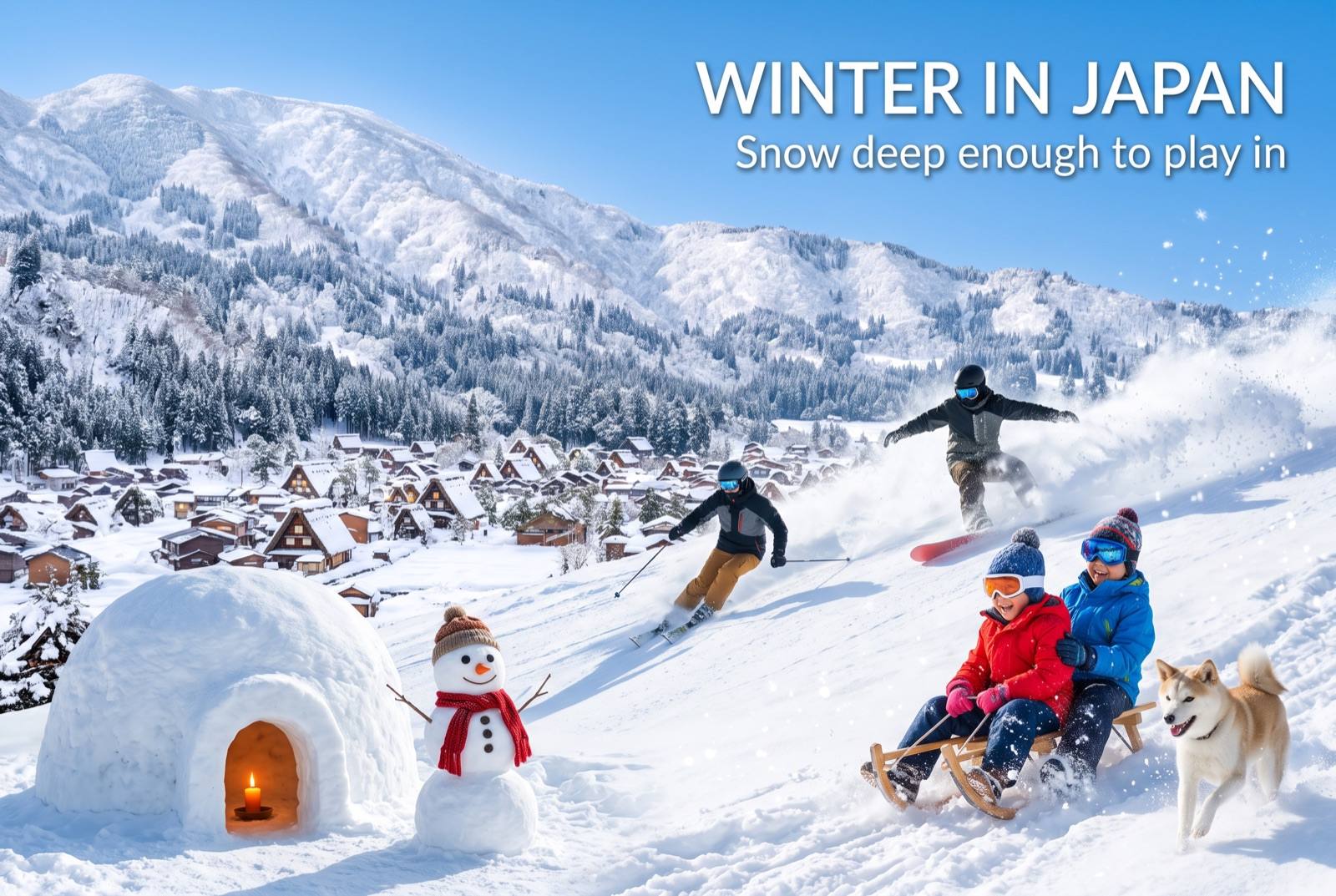
Deep snow, hot springs, crab and quiet temples.
These are the places the prefecture pages name for this season. Each one links to its own page, with opening times, prices and a MAP button.
Pick the season first, then the place.
| Prefecture | December – February |
|---|---|
| Aichi | Cold and dry, little snow. Eel and hotpot season, and the museums are quiet. |
| Akita | Among the heaviest snowfall in the world for an inhabited place. Hot springs, and trains that still run. |
| Aomori | Heavy snow — among the deepest in Japan. Trains run; mountain roads may not. |
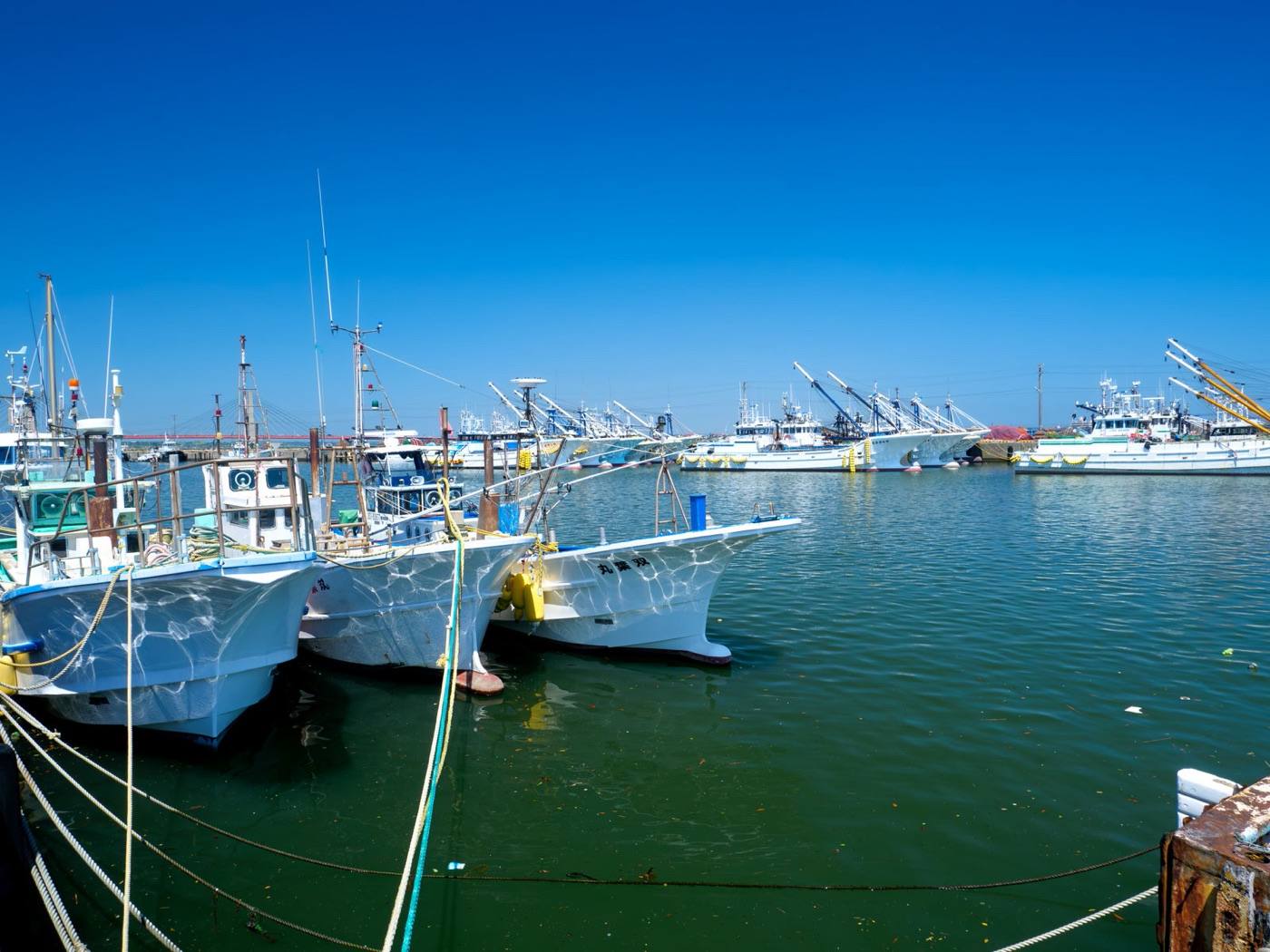
| Chiba | Mild for the region, and the sunrise at Choshi on New Year’s morning is a local tradition. |
| Ehime | Mild for Japan. The bath house is at its best, and the bridges are empty. |
| Fukui | Snow, grey sea and crab. The cliffs in winter are dramatic, and the path is exposed — stay back from the edge. |
| Fukuoka | Cold but rarely snowy in the city. Ramen weather, and the quietest season for the stalls. |
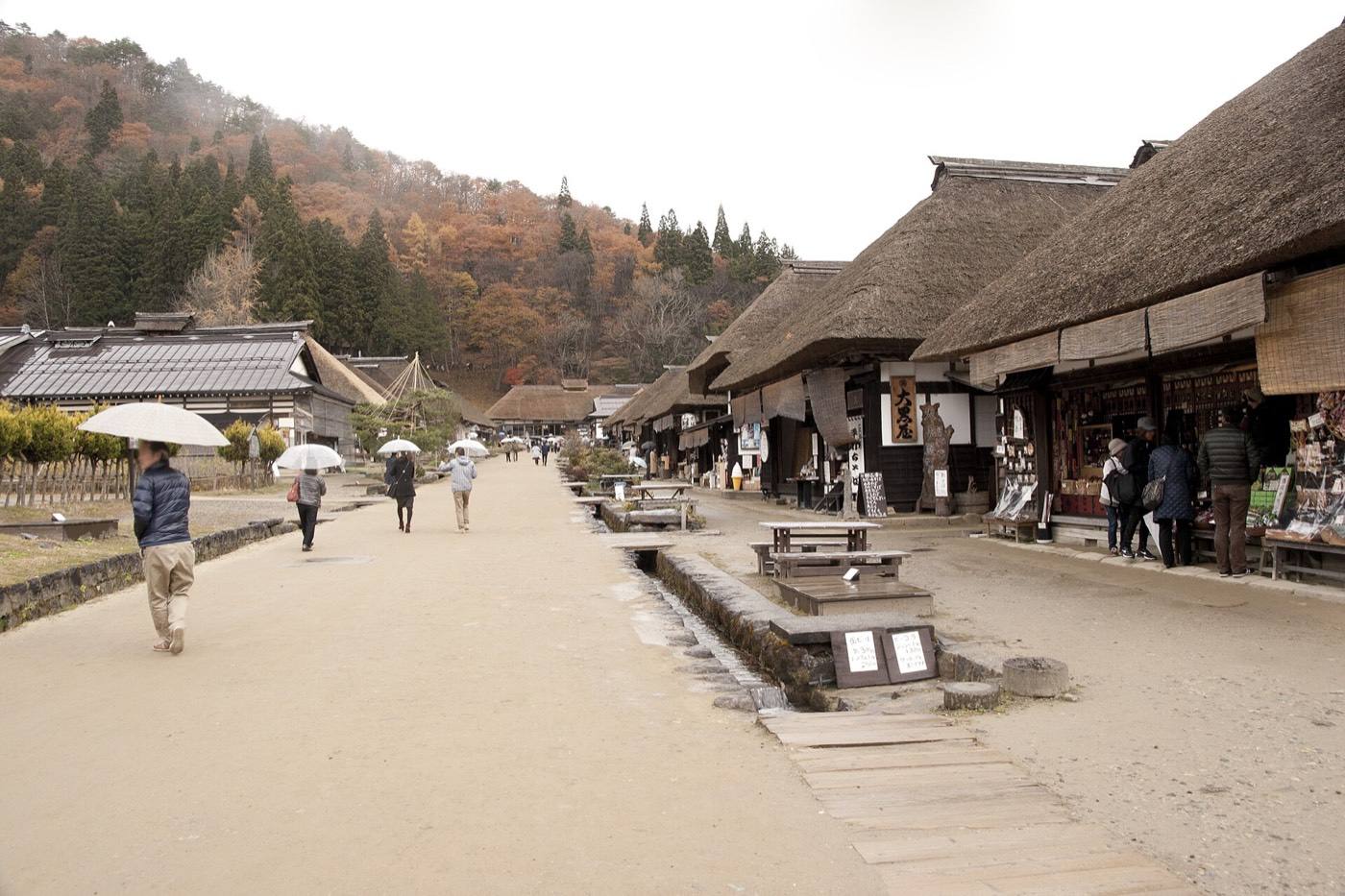
| Fukushima | Deep snow at Ouchi-juku, which is when the thatched village looks like the photographs. Swans on the lake. |
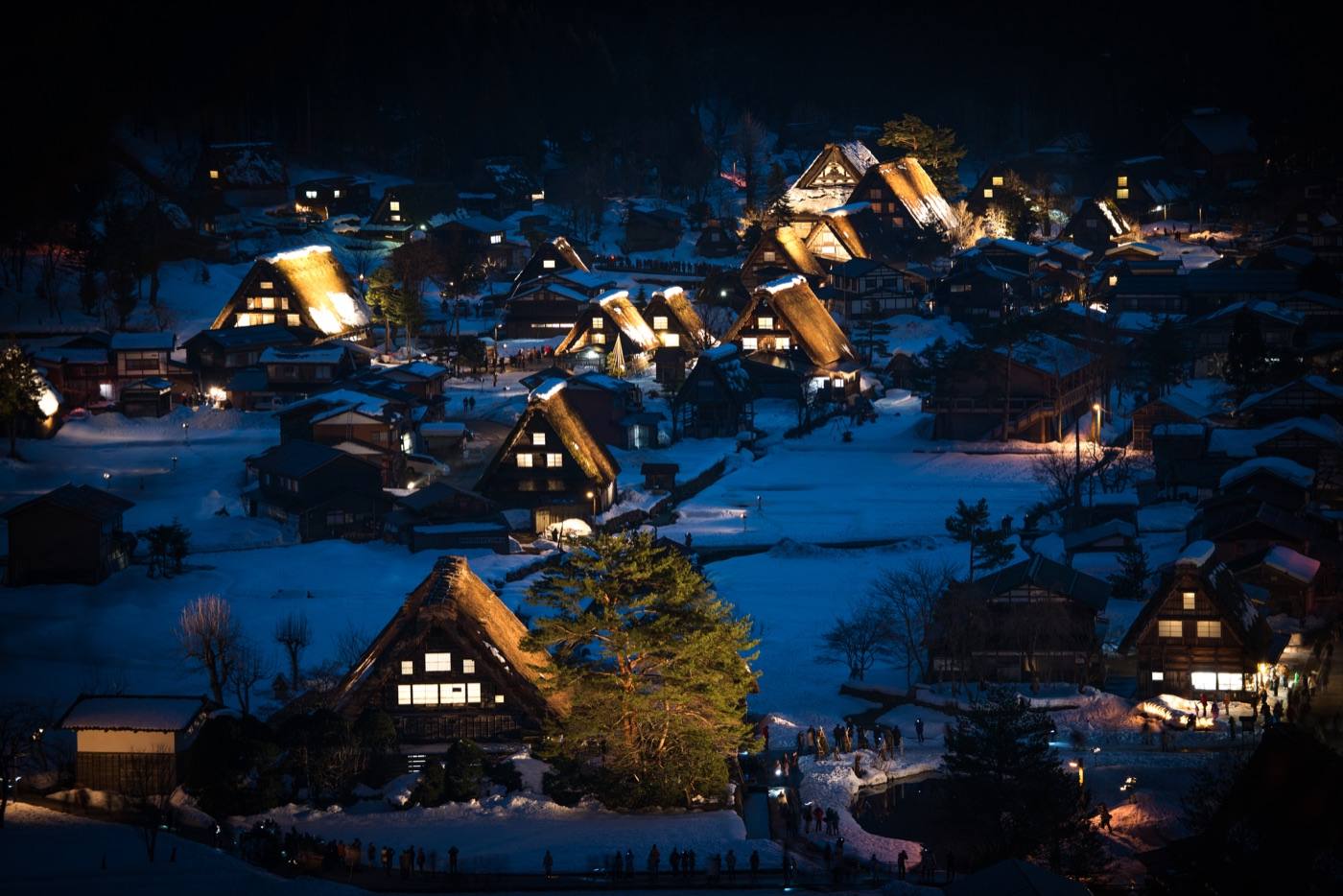
| Gifu | Deep snow at Shirakawa-go, which is when it looks like the photographs. Roads can close. |
| Gunma | An outdoor bath in falling snow is the point of this prefecture. Ski areas open, and roads may need chains. |
| Hiroshima | Cold but rarely snowy. Oysters are in season, grilled at stalls on the island. |
| Hokkaido | Dry powder snow, the snow festival in February, and drift ice on the north coast. Roads need winter tyres. |
| Hyogo | Snow crab season at Kinosaki, which is when that town is fully booked. Reserve early. |
| Ibaraki | Cold and dry. The falls freeze in a hard winter, and the plum garden starts at the end of it. |
| Ishikawa | Snow on the garden is the reason to come now. Grey skies, snow crab, and very few people. |
| Iwate | Cold and snowy inland, milder on the coast. The gold hall is at its quietest. |
| Kagawa | Cool and dry. Some island museums close on certain days |
| Kagoshima | Mild. Sand baths are at their best in cold weather, and the ferry still runs. |
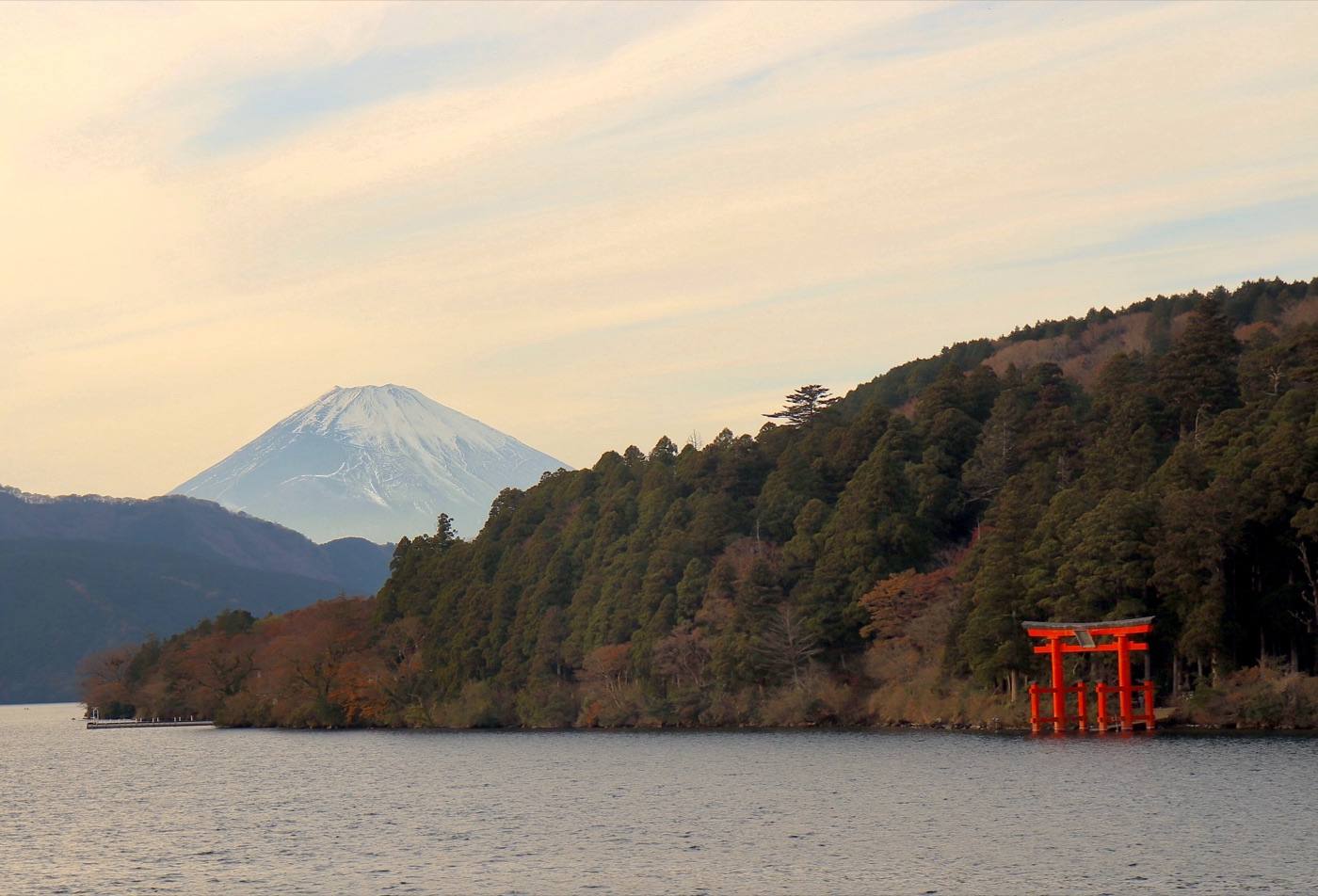
| Kanagawa | Cold and dry. The best months for seeing Mt. Fuji from Hakone, and the baths are at their best. |
| Kochi | Mild on the coast. The Sunday market runs all year, whatever the weather. |
| Kumamoto | Snow at the hot springs, which is what most people want from an onsen. Some mountain roads close |
| Kyoto | Cold, clear and quiet. Snow on a temple roof is rare, and the best thing in the city when it happens. |
| Mie | Cold and quiet. New Year is the shrine’s busiest week — come for it, or come from the fourth of January. |
| Miyagi | Cold and snowy inland, milder on the coast. Oysters are in season, and the foxes are at their thickest. |
| Miyazaki | The mildest winter in Kyushu. Mangoes are out of season, but the coast is empty. |
| Nagano | Deep snow, skiing, and the monkeys in the hot spring — which is the picture people come for. |
| Nagasaki | Cold wind off the sea. The Chinese quarter lights up for the lantern festival in winter. |
| Nara | Cold and very quiet. The deer stay all winter, and so do the lanterns. |
| Niigata | Several metres of snow. The closest reliable powder to Tokyo, and the reason to come. |
| Oita | The best season for an outdoor bath. Snow on the highway |
| Okayama | Cold and dry, with very little snow. The garden is at its emptiest and quietest. |
| Okinawa | Around 18–20°C. Too cool for swimming, right for walking, and the whales pass offshore. |
| Osaka | Cold but rarely snowy. Winter is hotpot season, and Osaka does it well. |
| Saga | Quiet and cold. Hot springs and porcelain, which is a good enough day. |
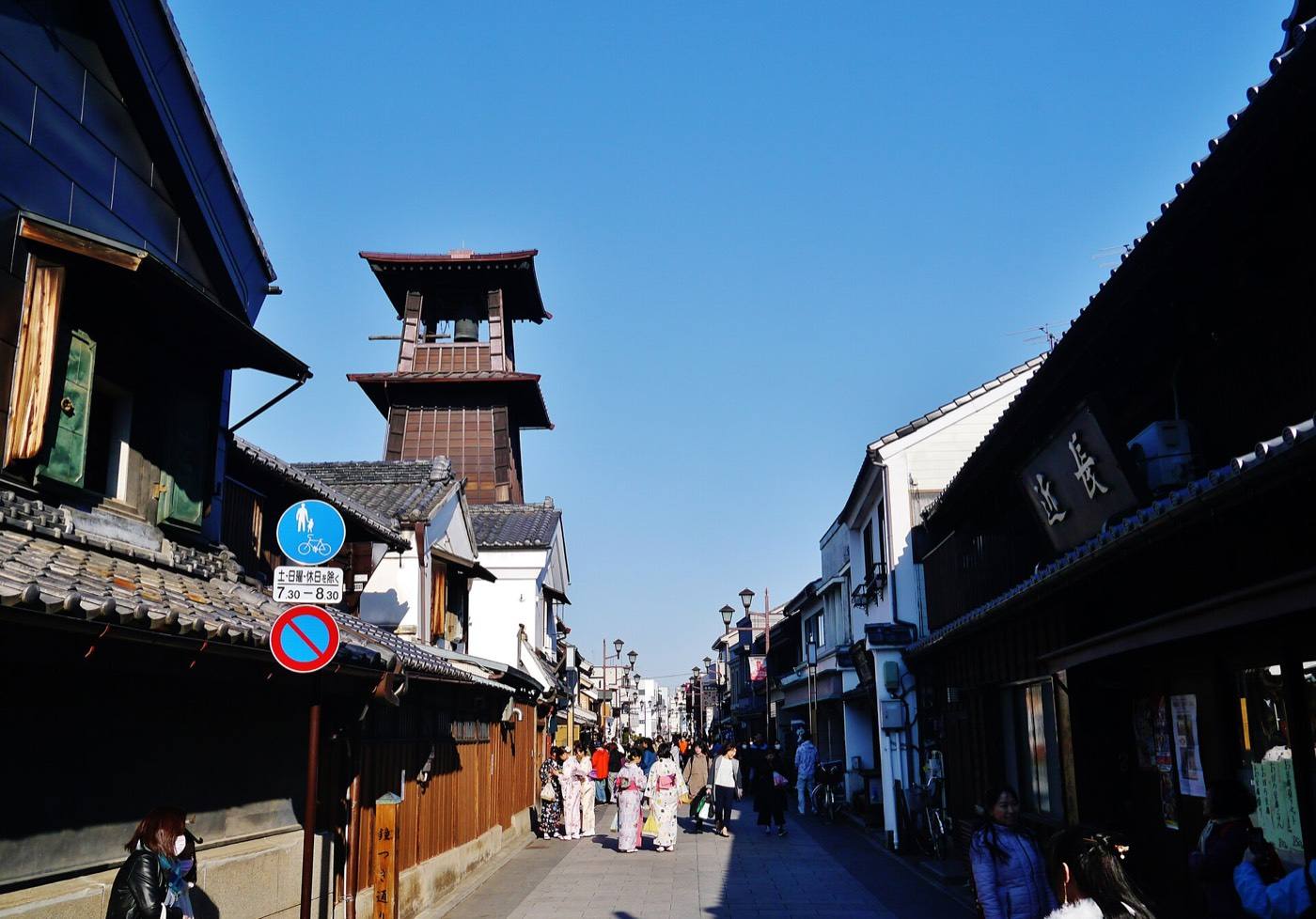
| Saitama | Cold and dry, with the icicles lit in January and February. Kawagoe is quiet and pleasant. |
| Shiga | Snow on the northern shore and on the mountain temples. The gate in the lake in snow is worth the cold. |
| Shimane | Grey and cold off the sea, with some snow. Crab season, and very few visitors. |
| Shizuoka | The clearest views of the mountain, and Izu is the mildest winter within reach of Tokyo. |
| Tochigi | The shrines in snow are worth the cold. |
| Tokushima | Cold in the mountains, mild on the coast. The vine bridge is lit on winter evenings. |
| Tokyo | Cold, dry and bright, with very little snow. Mt. Fuji is visible from tall buildings on clear mornings. |
| Tottori | Heavy snow on the Japan Sea side. Snow crab is the reason people come now. |
| Toyama | The Alpine Route is closed. The coast view of the mountains is at its sharpest now. |
| Wakayama | Snow on the plateau and freezing mornings in the temples. Coastal Shirahama stays mild. |
| Yamagata | Deep snow. Snow monsters in February, and the gas-lit street under snow. Book far ahead. |
| Yamaguchi | Cold wind off the sea. Fugu is at its best now, and Shimonoseki is busy with it. |
| Yamanashi | The best months to see it. Cold, dry mornings, snow on the cone, and the lakes still. |