Eating in Shimane
Try these dishes while you are here.
Try these dishes while you are here.
Order the first one and work down the list.
We recommend ordering this one first.
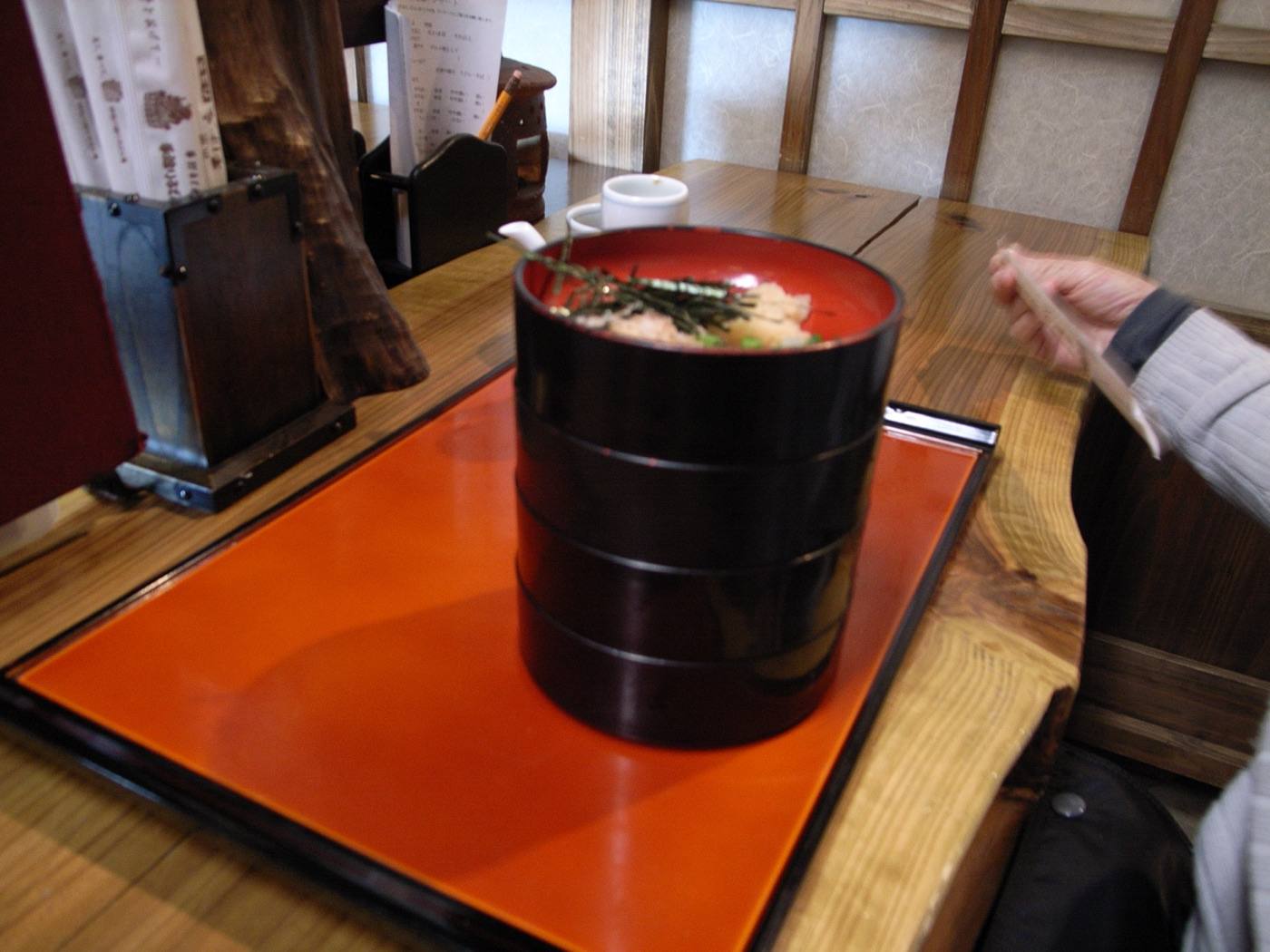
Buckwheat served in three stacked lacquer bowls, sauce poured on rather than dipped into. Dark and strong.
Tiny clams from the brackish lake at Matsue, in miso soup. The lake produces a great many of them.

Blackthroat seaperch, grilled. Rich, oily, expensive, and the fish this coast is proud of.
Matsue is one of Japan’s tea-ceremony towns, and its sweet shops are three hundred years old.
Small shops, no English sign outside, and worth the walk.
Matsue sits between a lake and the sea, and the counter here takes from both. It is inside the station building, which matters when you come off the train with a bag and nowhere to put it.
Izumo soba comes in three stacked round lacquer boxes. You pour the sauce onto the top one, eat it, then tip what is left onto the next. Five minutes from Izumo Taisha.
Matsue drinks more matcha than almost anywhere in Japan, because a lord here was a tea master. The sweets are made to be eaten before the bitter tea. Baking since 1874.
Ten minutes from Izumo Taisha. About ten wines are open on the counter to taste for nothing, along with grape juice for anyone not drinking.
Lake Shinji is brackish, and its yamato shijimi clams are the best known in Japan. Here they are cooked with soy and laid over rice, shells removed.
Genji-maki is a thin sheet of castella cake rolled around sweet bean paste. Nearly every sweet shop in Tsuwano sells its own, and this one opens early.
Omori grew up around the silver mine, and its houses still line one street. This shop works out of one of them, with a café looking onto the inner garden.
A cook trained in Japanese food grills Shimane beef here, in the middle of the Tamatsukuri hot spring village.
Akaten is a fish cake coloured red and made hot with pepper, eaten in Hamada. The maker sells it at the works.