Eating in Oita
Try these dishes while you are here.
Try these dishes while you are here.
Order the first one and work down the list.
We recommend ordering this one first.
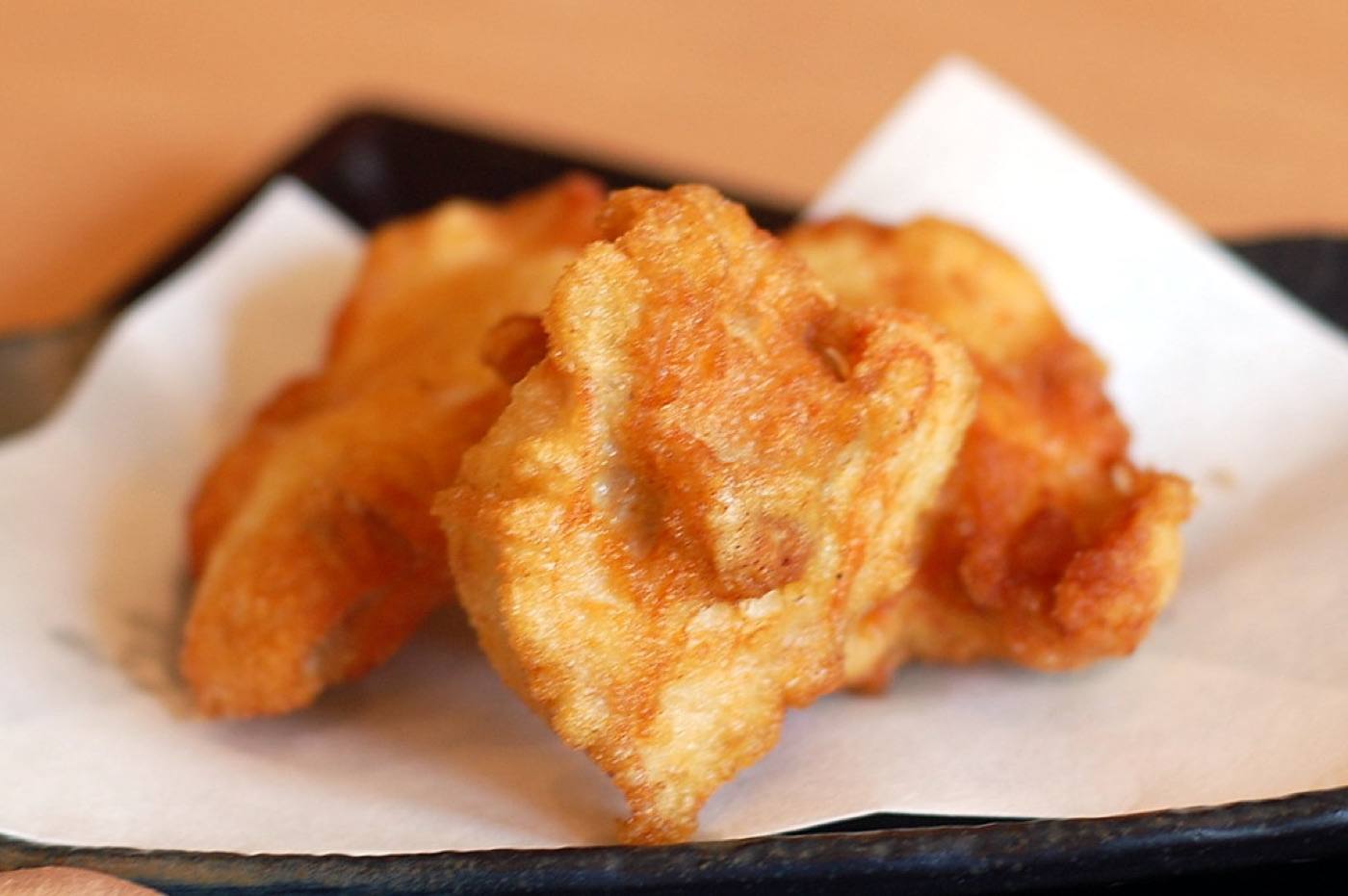
Chicken in a light tempura batter, eaten with ponzu and mustard. Oita’s everyday dish.

Flat hand-pulled wheat dumplings in miso soup with root vegetables. Farmers’ food, warm and cheap.

Line-caught in the fast strait and served raw the same day. Firm in a way farmed fish is not.
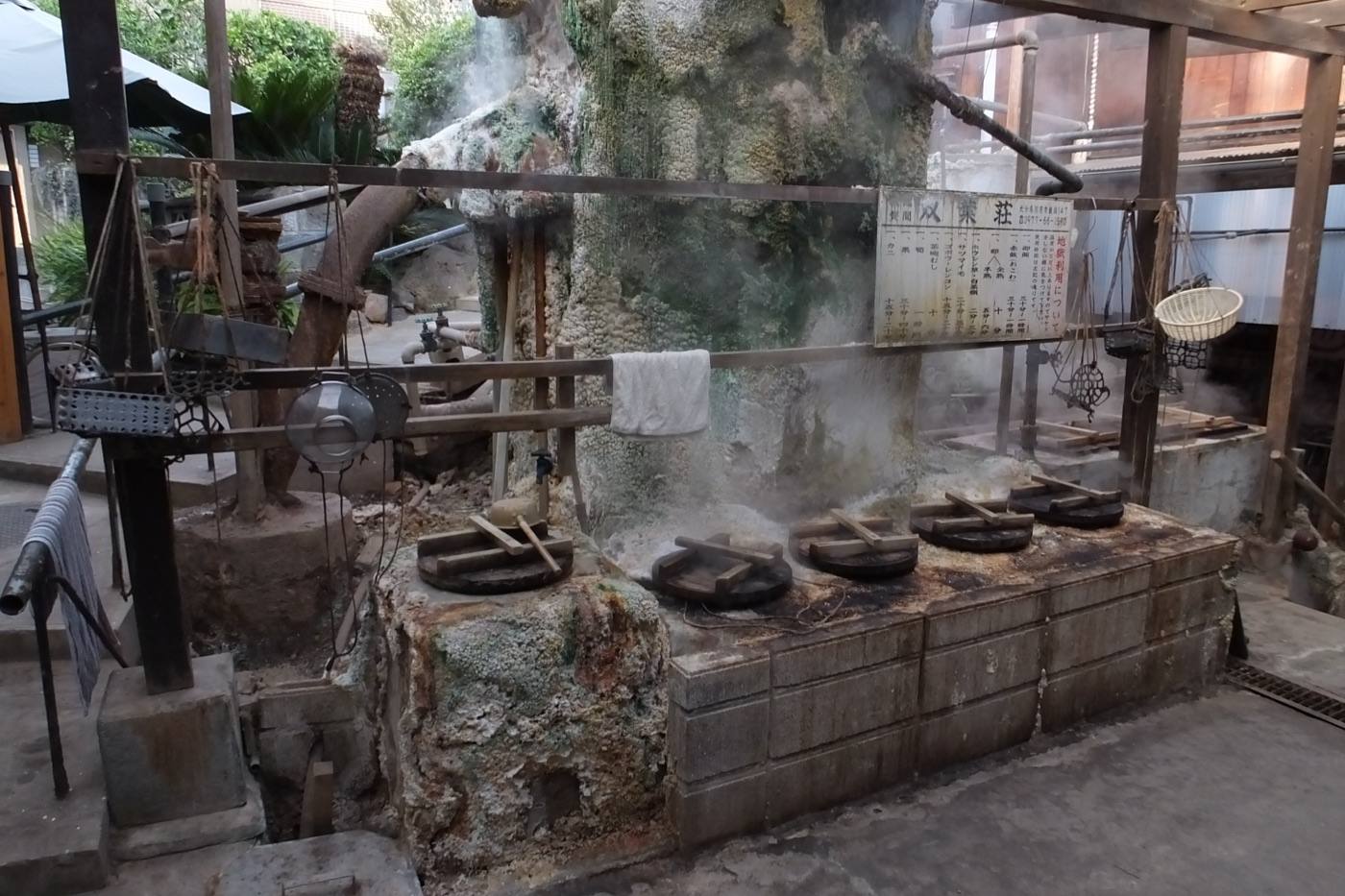
Vegetables, eggs and seafood steamed over a hot spring vent, which you can do yourself in Beppu.
Small shops, no English sign outside, and worth the walk.
A ramen shop seven minutes from Yufuin station, open from eleven in the morning until nine at night. No afternoon break — useful in a town where the day is arranged around bath times.
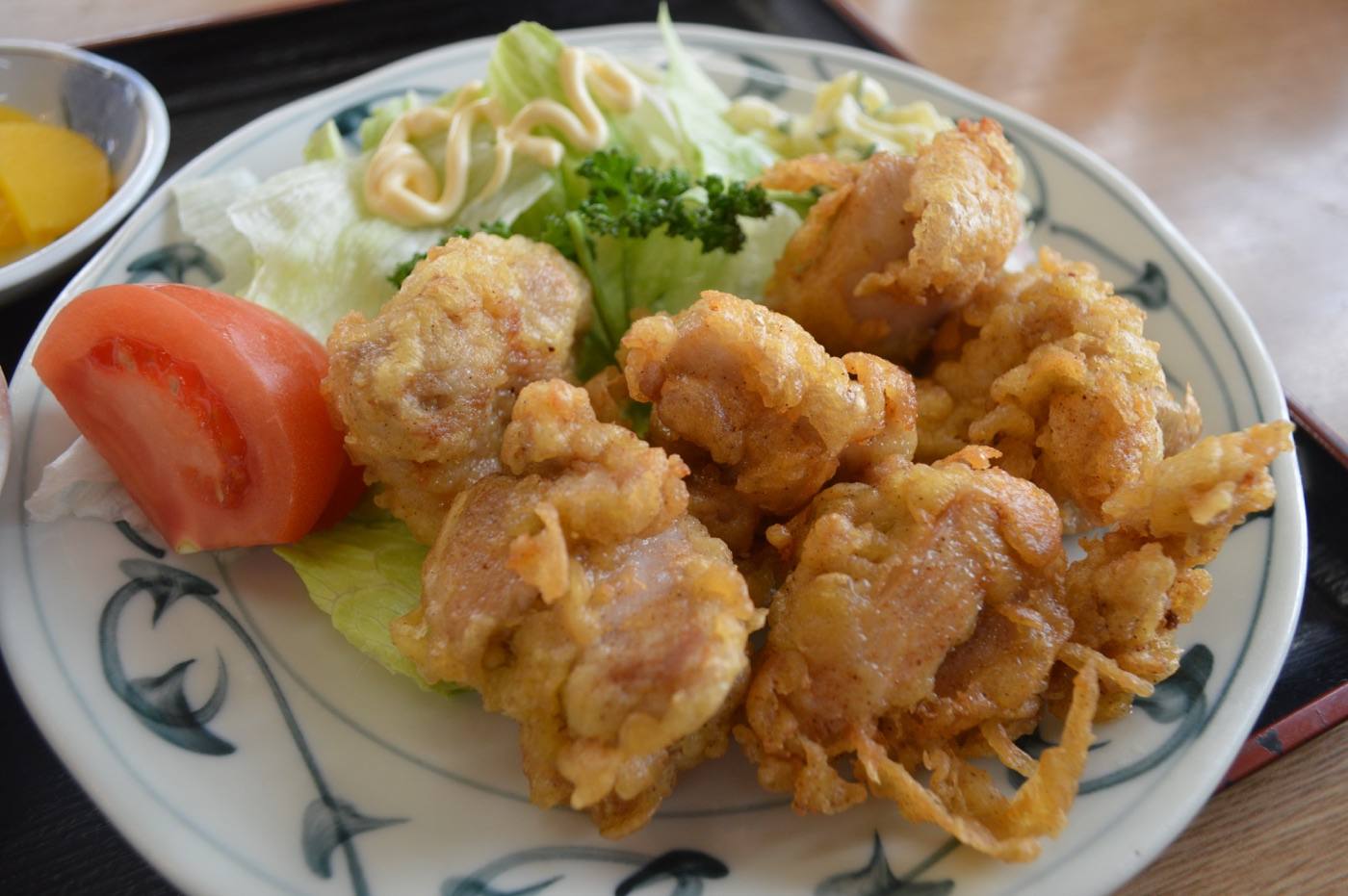
Toriten is chicken in a light batter, fried and eaten with ponzu and mustard. Oita eats it the way other places eat tempura.
Up on the hillside at Myoban, where white steam comes straight out of the ground. The custard is cooked in that steam, which turns the top dark and slightly bitter.
Nakatsu has more fried chicken shops per person than anywhere in Japan. The meat is soaked in a salt marinade rather than soy, so it comes out pale and very juicy.
Dango-jiru is wheat dough pulled into wide flat strips and simmered with root vegetables in miso. It was farmers' food. The room is packed with old shop signs and lanterns.
Hita sits in a basin where several rivers meet, and that water goes into the brewing. Kyushu soy sauce is sweeter than the kind sold elsewhere in Japan.
Kinrin Lake steams at dawn and the town walks the path around it. This place stands a few steps off that path and grills Bungo beef over charcoal to lay over rice.
Usuki is a town of soy sauce and tofu. This place builds its set meals around the local tofu and yuba, the skin lifted off soy milk.
Nakatsu is a town of fried-chicken shops. This one marinates the chicken for a full day in a tare made with local soy sauce. It is a takeaway shop, so there is nowhere to sit.