Bridges橋
Walk or cycle at least one of these.
Walk or cycle at least one of these.
Bridges are worth a page here because several of them are the reason people visit a place at all — and they are all quite different problems solved in public.
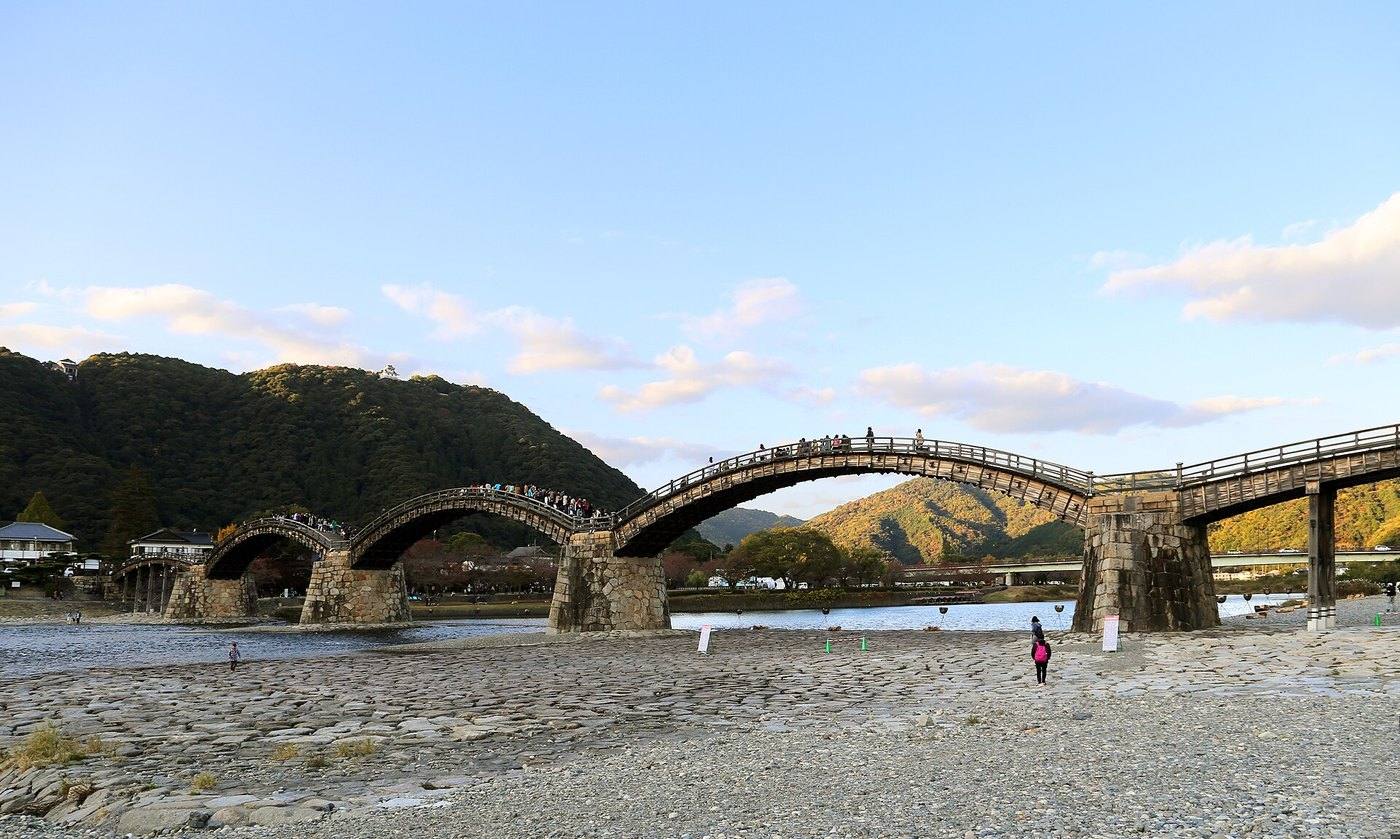
The Kintaikyo in Yamaguchi is five wooden arches on stone piers, rebuilt periodically using the same joinery, without nails in the arches. The Iya vine bridge in Tokushima is woven from living vine, moves under you, and has gaps between the planks. The Tsunoshima bridge runs low over startlingly blue water to a small island, and is mostly visited by people who just want to drive across it.
And the Shimanami Kaido links six islands with a dedicated cycle path across all of them — seventy kilometres of bridge and island between Honshu and Shikoku.
Most charge a small toll on foot, a few hundred yen, cash.
The vine bridge is a genuine wobble with gaps you can see the river through. It is safe and inspected; it does not feel it. Hold the sides, go one at a time with children, and do not photograph while walking.
Wind closes the exposed ones, and the cycle path on the Shimanami is exposed by design.
Each links to its prefecture.
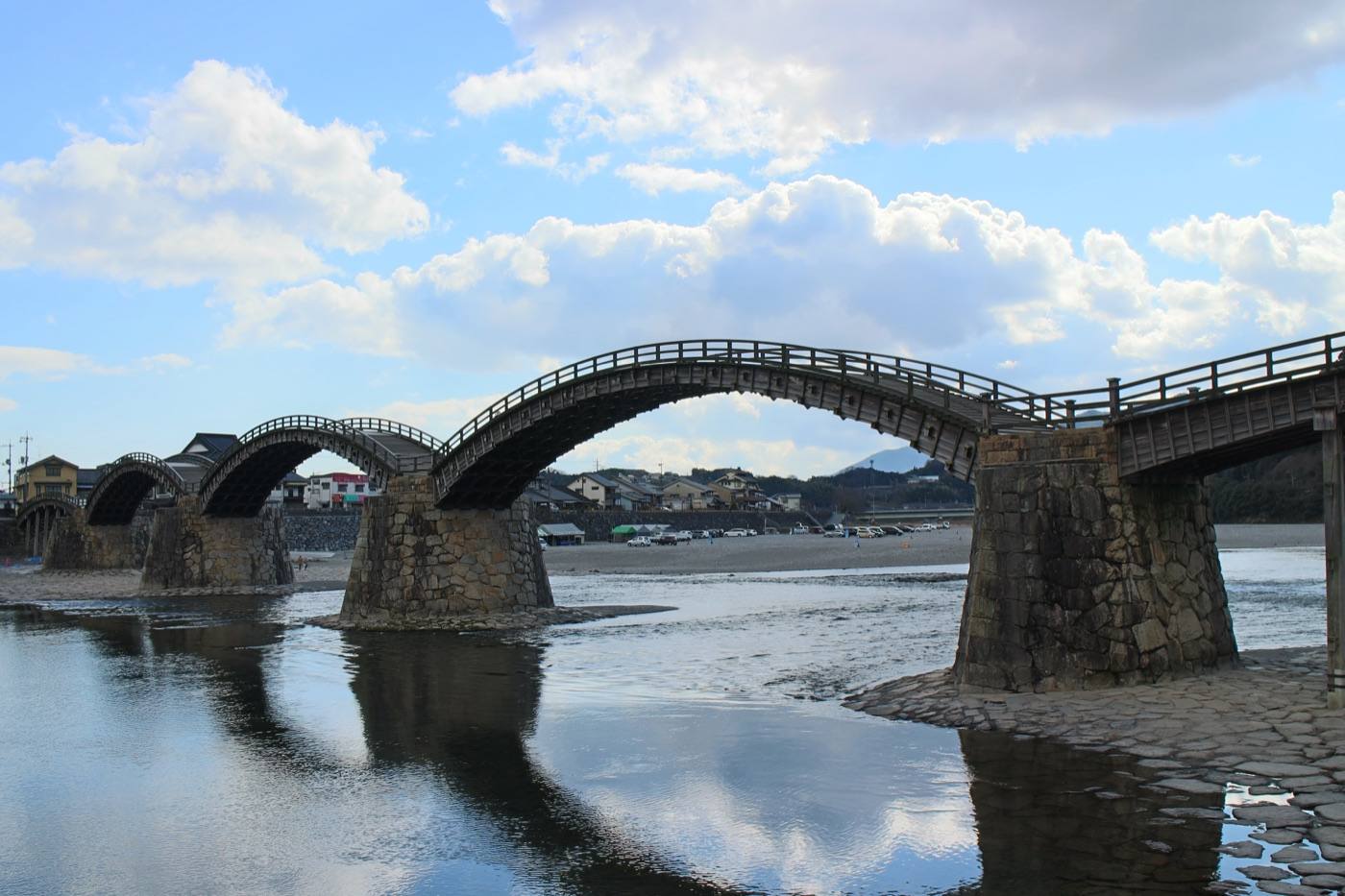
Five wooden arches on stone piers, built without nails in the spans.

Woven from vine, with gaps between the planks. It moves.
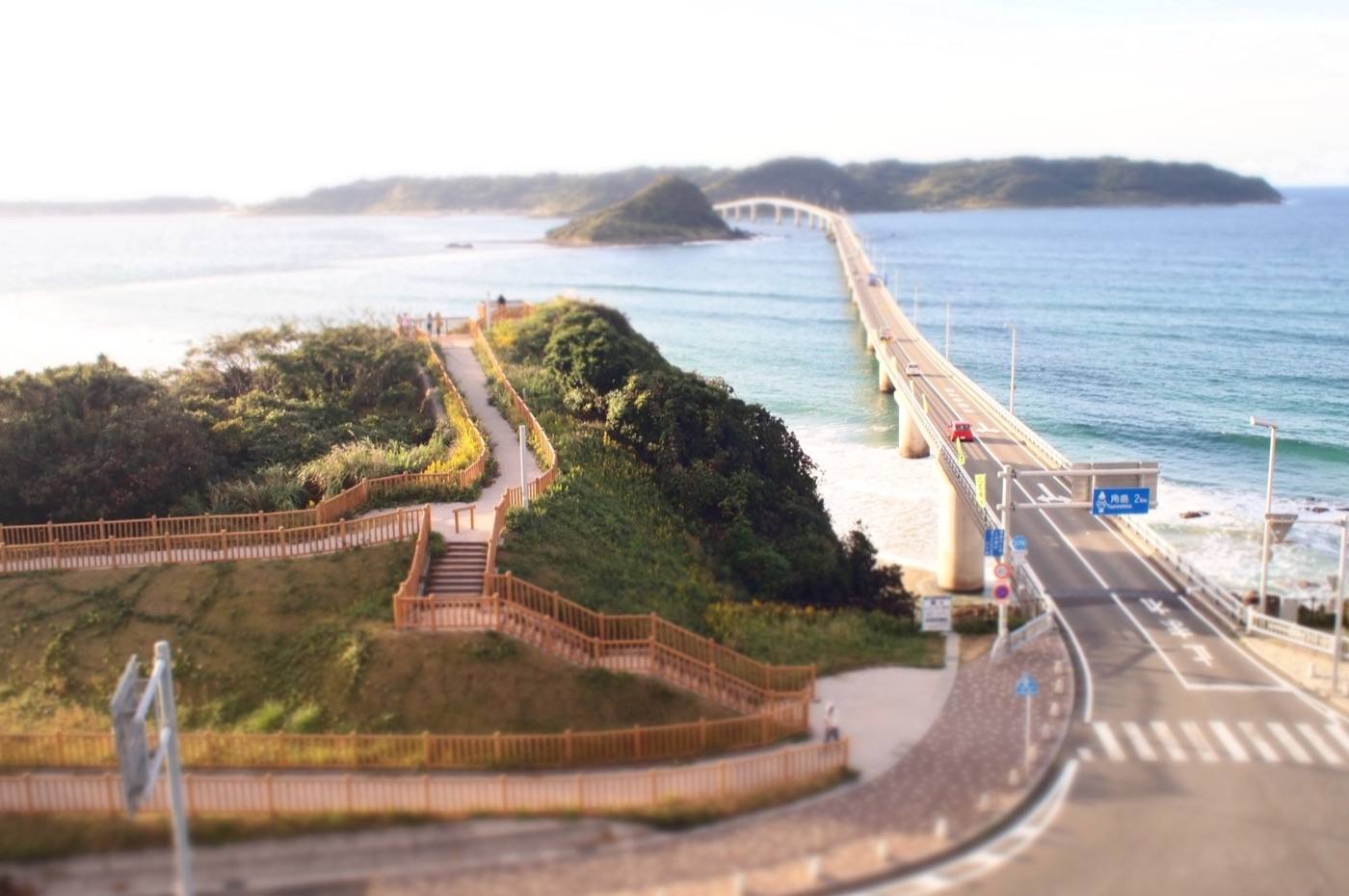
A long low bridge over blue water to a small island. A driving road, and a famous one.
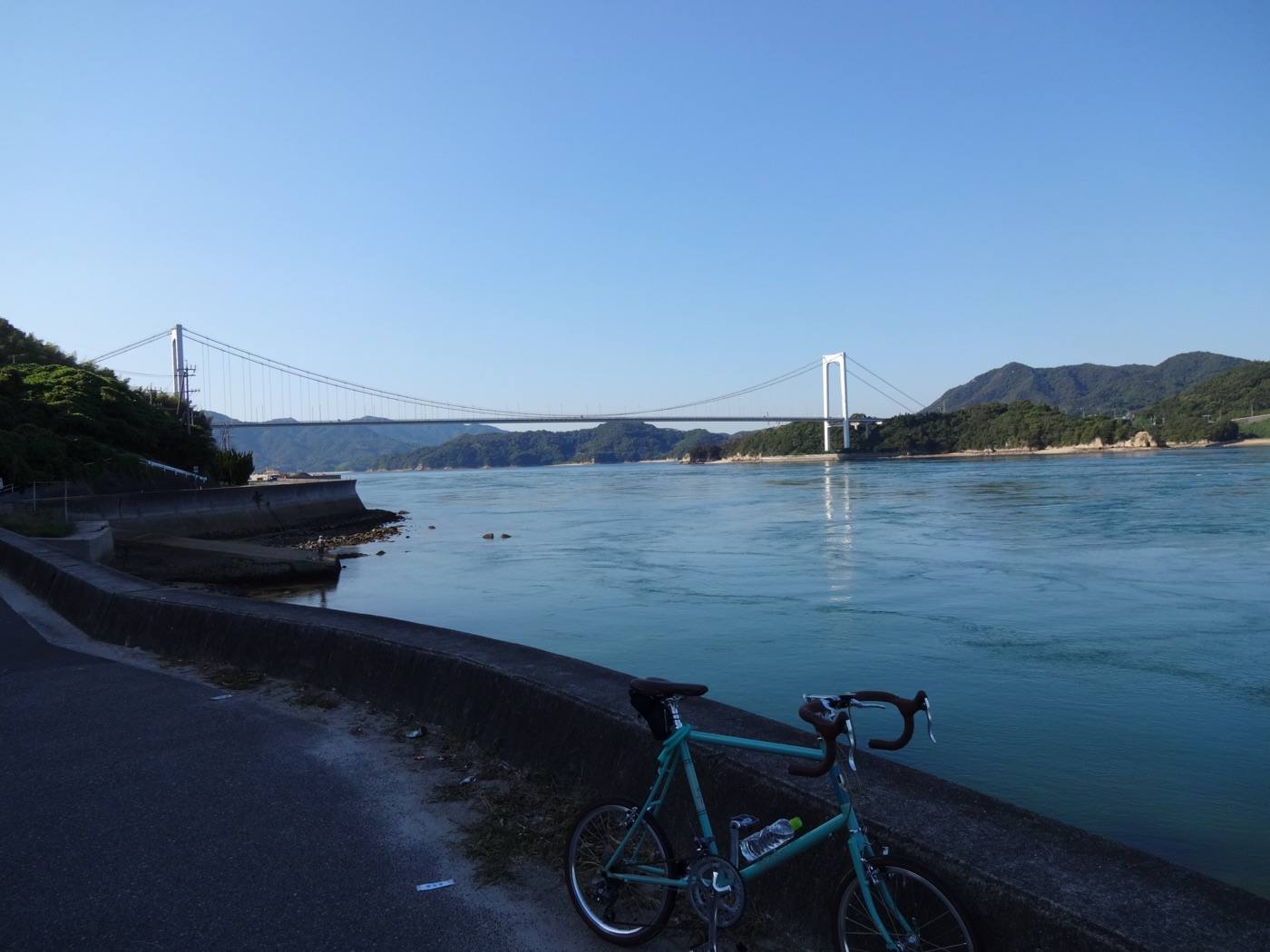
Six islands and their bridges, with a cycle path over all of them.
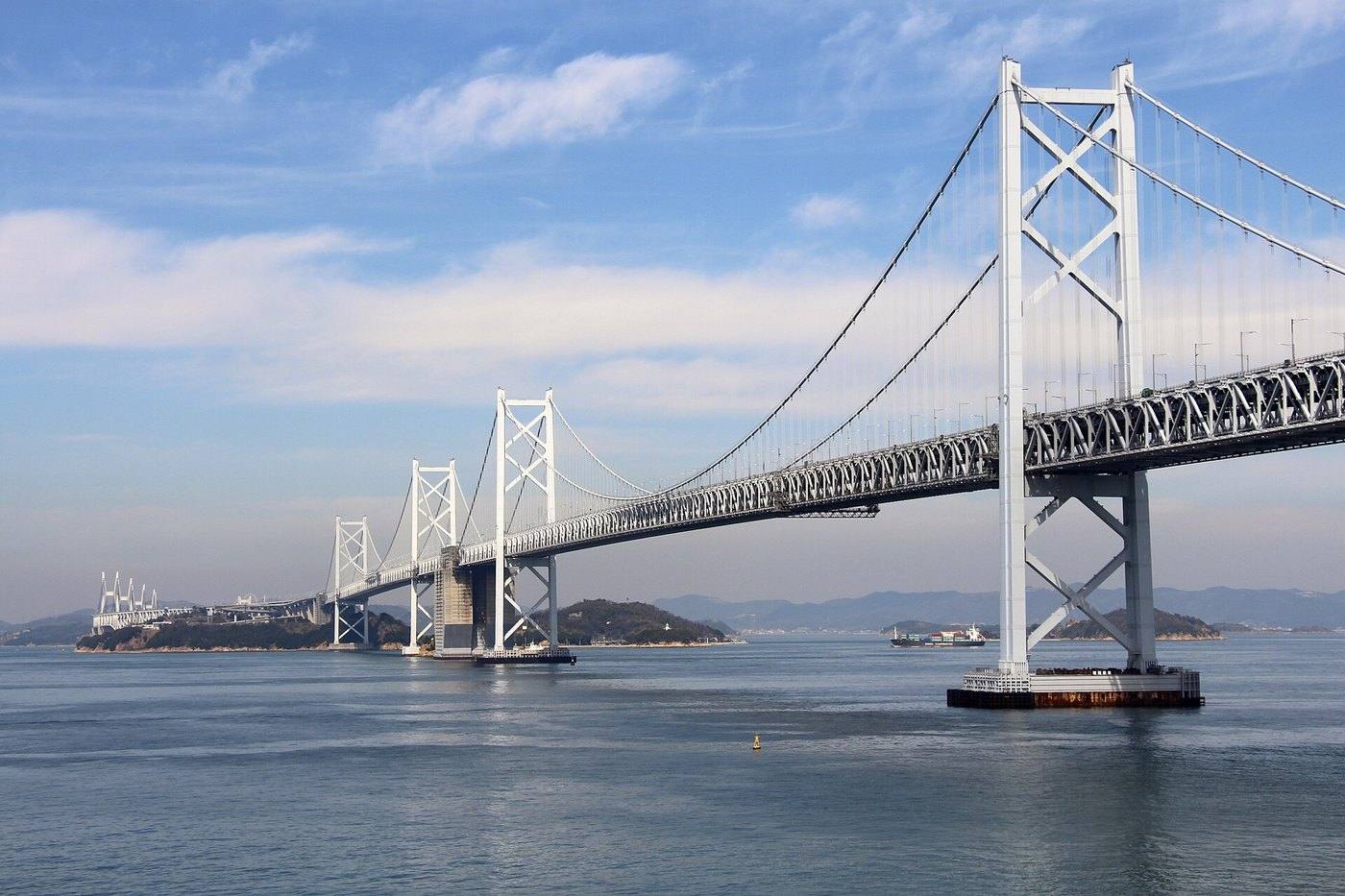
Road and rail together across the inland sea, seen from Washuzan above it.