Eating in Miyagi
Try these dishes while you are here.
Try these dishes while you are here.
Order the first one and work down the list.
We recommend ordering this one first.
Grilled beef tongue, thick-sliced and salted. Sendai turns it into a proper meal rather than a novelty.
Matsushima Bay oysters, grilled at stalls along the front in winter.

Sweet mashed green soybean, on rice cakes or in a milkshake. Bright green, and better than it sounds.
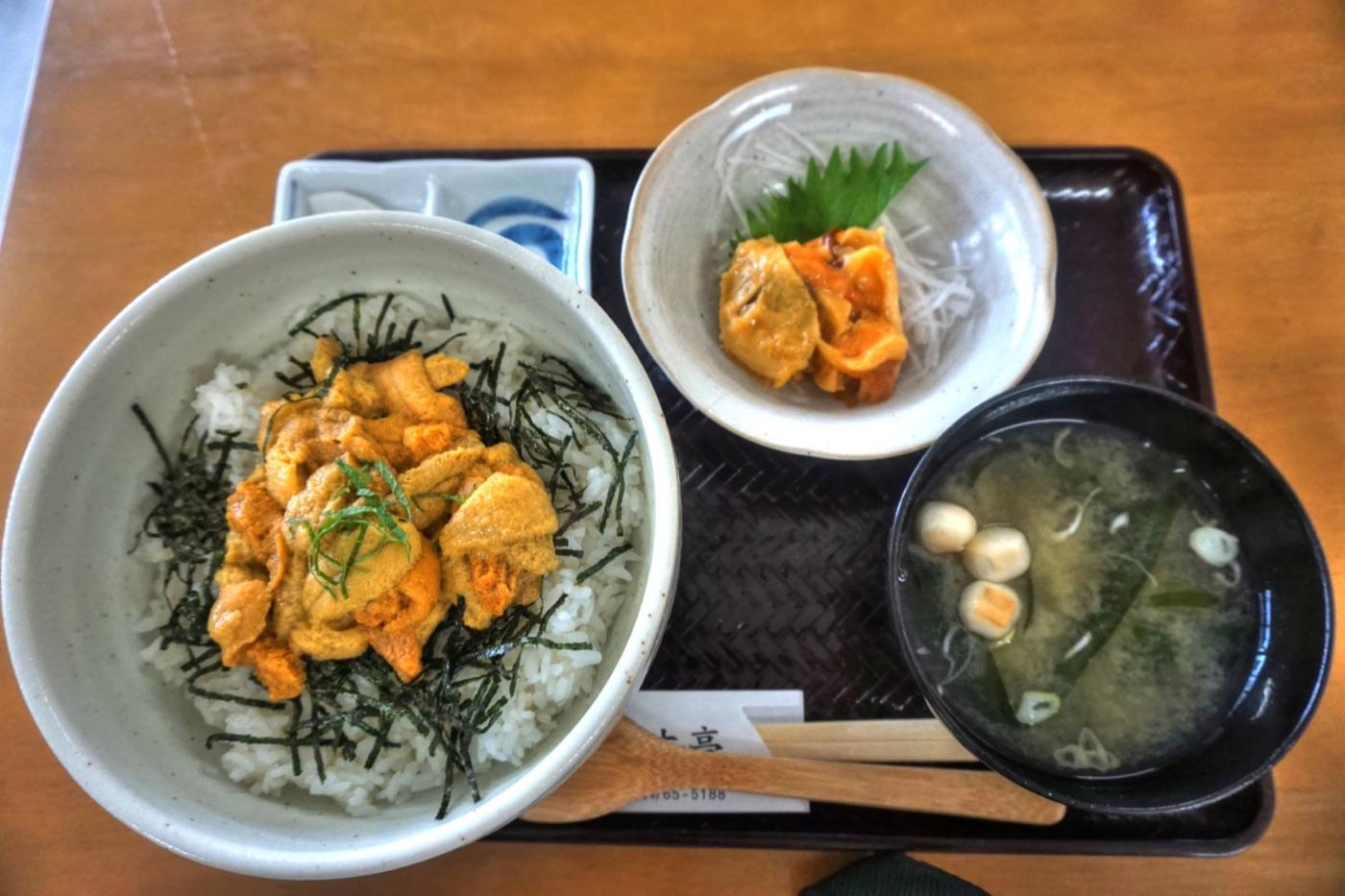
Sea squirt, eaten raw. Unmistakable, strongly of the sea, and the local test of a visitor.
Small shops, no English sign outside, and worth the walk.
Thick-cut beef tongue grilled over charcoal, with barley rice and a tail soup. It is on the third floor of the station itself, on a corridor of tongue restaurants — you can eat before your train without leaving the building.
Beef tongue salted, grilled over charcoal and served with barley rice and oxtail soup. In the covered shopping streets in the middle of Sendai.
A shop in the covered shopping street that makes sasa-kamaboko — white fish paste shaped like a bamboo leaf. At the counter they batter it and fry it on a stick.
Zunda is young soy beans pounded with a little sugar and salt until they turn into a rough green paste. It is spooned over warm rice cake and eaten at once.
Uumen are about nine centimetres long and made with no oil at all, so they are easy on the stomach. The story is that a son made them for his sick father. The shop sits in the noodle works.
The islands of Matsushima break the waves, and oysters have been farmed in the calm water behind them for centuries. This kitchen grills, fries and steams them a minute from the pier.
The Osaki plain grows rice, and this market sells it alongside the vegetables, mushrooms and mountain greens that come in from the same fields. A bakery works inside.
Akiu is the hot-spring valley behind Sendai. The grocery in the village makes its own ohagi, rice wrapped in sweet bean paste, in three kinds.
Naruko grows its own buckwheat. Here the noodles are fried until crisp, then covered with a thick sauce full of mountain vegetables.
Mapo sauce over fried noodles. The noodles are steamed, dried until crisp, softened in hot water and then fried, so they come out crisp outside and chewy inside.