Eating in Ishikawa
Try these dishes while you are here.
Try these dishes while you are here.
Order the first one and work down the list.
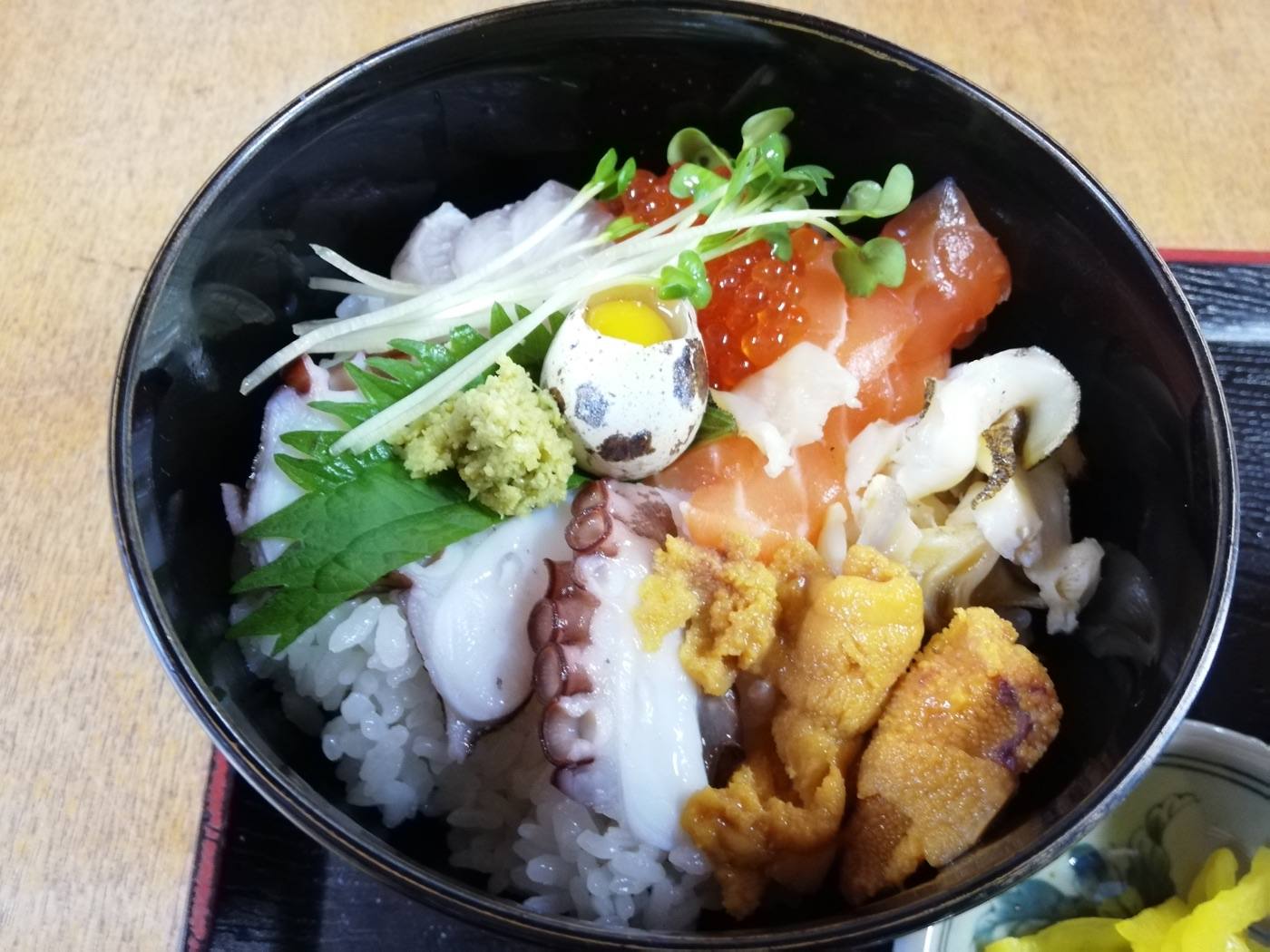
We recommend ordering this one first.
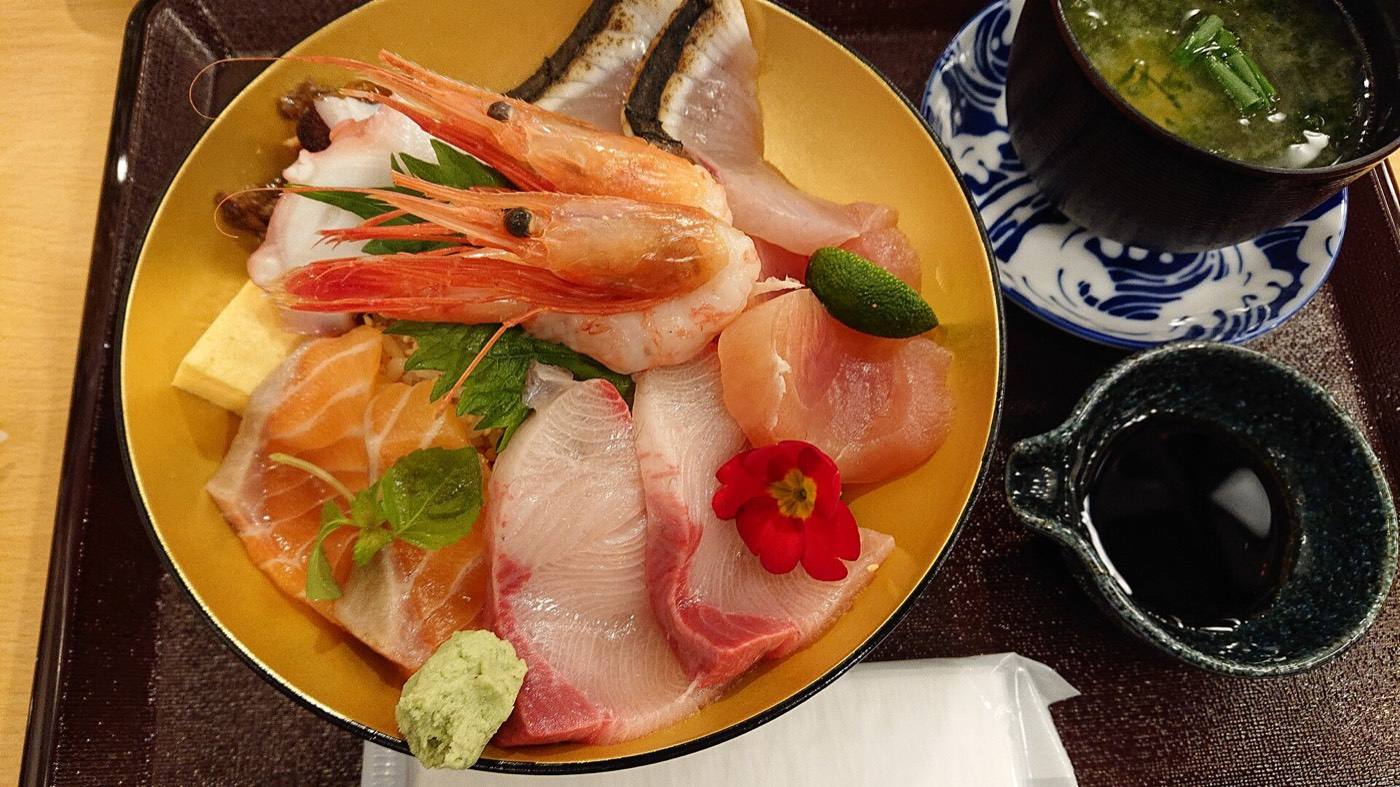
A bowl of whatever the market landed that morning, from Omicho in the middle of Kanazawa.
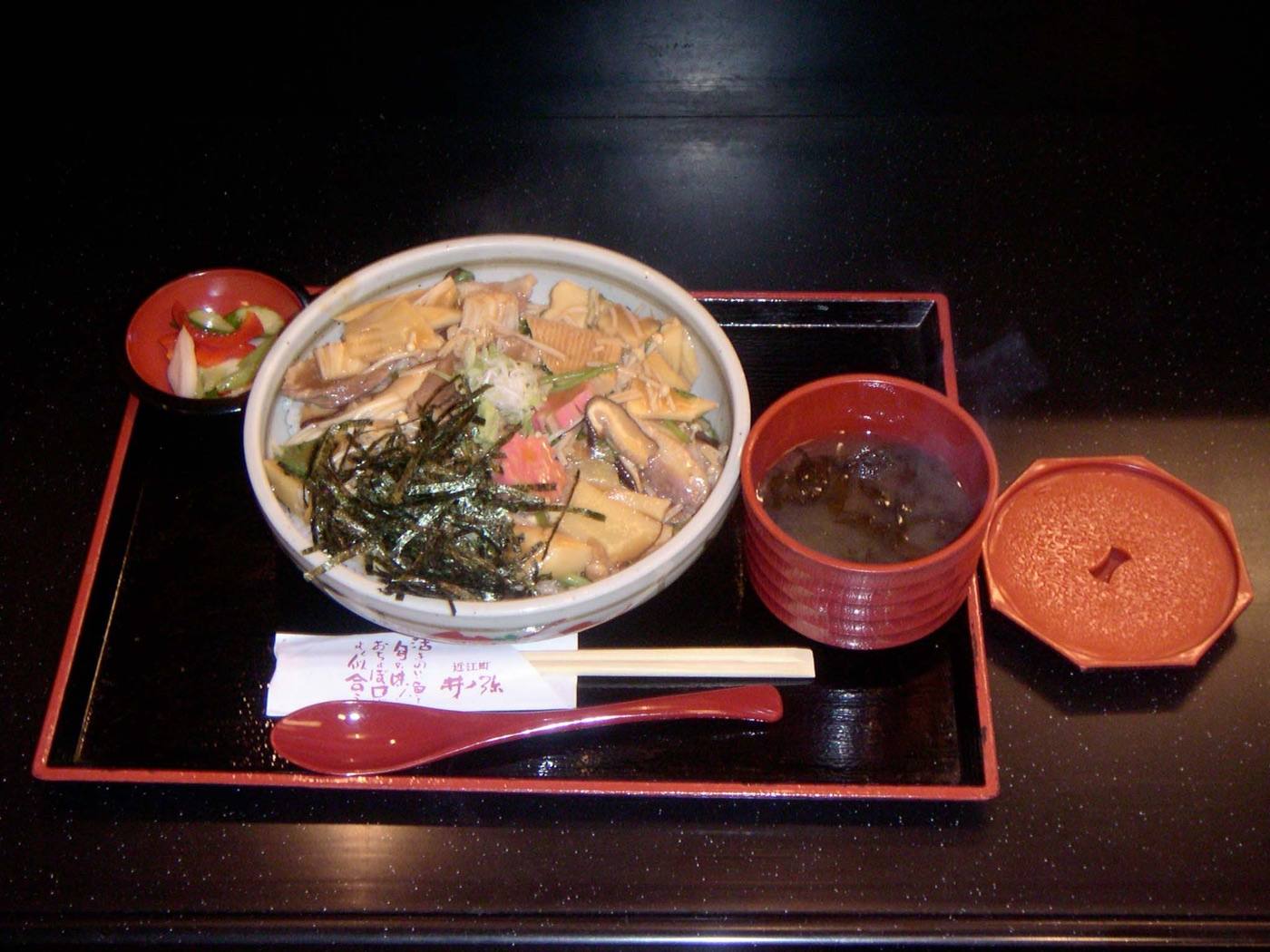
Duck simmered with wheat gluten and vegetables in a thick sauce, with wasabi on top. Kanazawa’s own dish.
Crab landed here from November. Boiled whole, and expensive for a reason.
Almost all of Japan’s gold leaf is beaten here, and it ends up on ice cream, castella and sake.
Small shops, no English sign outside, and worth the walk.
Kanazawa has a market the tour buses go to, and a market the city actually runs on. This canteen is inside the second one. The people at the next table work in the building.
Sushi on a belt inside the market where the fish is sold. Open from half past eight in the morning until eight at night, every day.
Oden is things simmered in light stock. Kanazawa puts crab and wheat gluten in it. This counter is in the shopping floor of Kanazawa station, so it works before a train.
Kanazawa beats almost all of Japan's gold leaf, thin enough to tear on a breath. A whole square is laid over soft ice cream, on the old teahouse street.
Kaga boucha is made by roasting the stems of the tea plant rather than the leaves. It comes out amber, smells toasted, and has very little bitterness or caffeine.
Rakugan is rice flour and sugar pressed into carved wooden moulds and dried. It is made to be eaten before matcha. There is a room of old moulds upstairs.
This is a steamed yokan with whole chestnuts set through it, so every slice comes out full of them. It is sold by the bar and cut at home.
Hanton rice is a Kanazawa dish: ketchup rice under a thin omelette, with fried fish laid on top.
Jibu-ni is duck simmered with mushrooms and greens, served in a shallow lacquer bowl. This place stands at the gate of Kenrokuen.
Tofu weighted down until the water is pressed out, so it keeps its shape and the soybean flavour concentrates. The soy milk is separated from the lees before boiling.