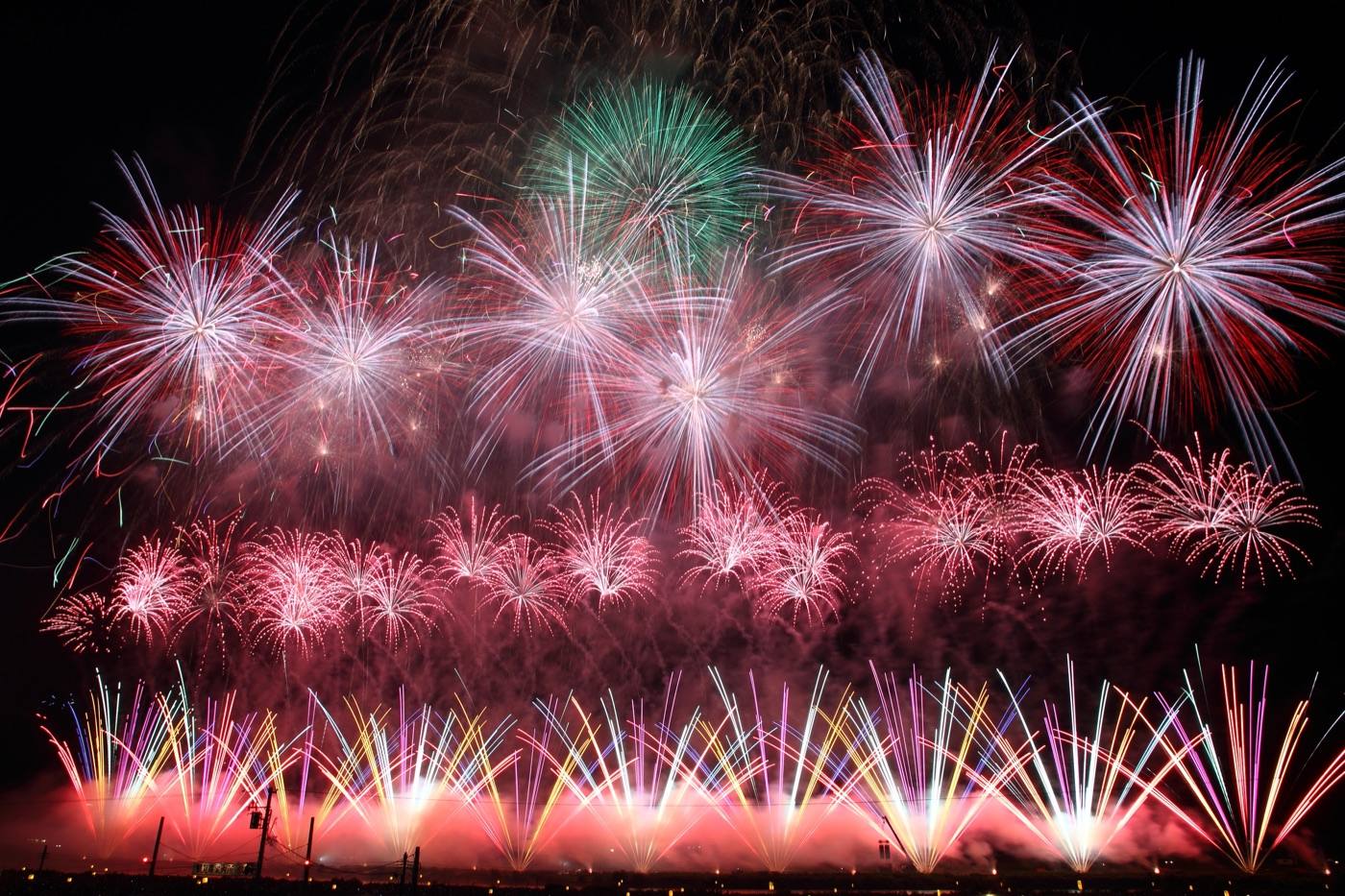
Fireworks花火
Take a mat, arrive early and sit down for it. Getting in is easy — plan how you get out.
Take a mat, arrive early and sit down for it. Getting in is easy — plan how you get out.
Japanese fireworks are a summer institution, and they are different from fireworks elsewhere in three ways. They are enormous — some shells are wider than a house. They are watched sitting down, on a river bank, with food. And they go on for an hour or two, not fifteen minutes.
They run from late July through August, several a week somewhere in the country, and the large ones draw hundreds of thousands of people to a river. Many people wear a cotton yukata, and if you want to, hire shops near the venue will dress you in one for a couple of thousand yen.
The practical reality is the crowd. Getting in is easy; getting out afterwards is an hour of shuffling towards a station with fifty thousand other people. Plan the going home before you go.
Arrive two or three hours early with a mat, and buy food at a convenience store on the way — the stalls at the site have long queues.
Choose a spot you can leave easily. A river bank a kilometre downstream has the same sky and a tenth of the people.
Decide your exit first. Pick the second-nearest station, walk to it rather than the closest, and you will board a train instead of joining a queue.
Or leave ten minutes before the end. You will lose the finale and gain an hour.