Eating in Saitama
Try these dishes while you are here.
Try these dishes while you are here.
Order the first one and work down the list.
We recommend ordering this one first.
Kawagoe built a whole lane on it: sweet potato ice cream, chips, cakes and beer.

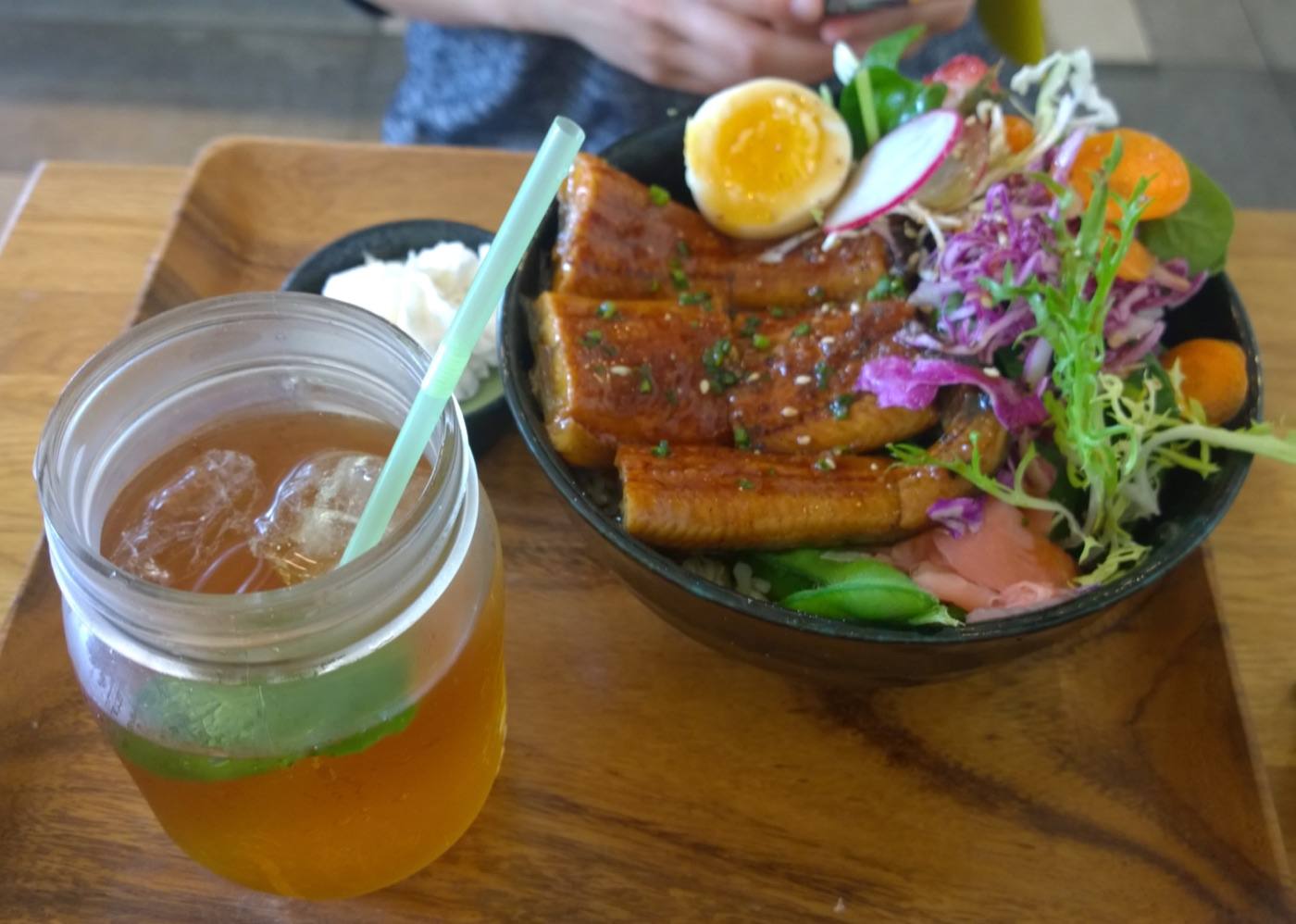
Grilled eel over rice, a river-town speciality in Kawagoe and along the old canals.

Buckwheat grown in the hills, eaten cold with a dipping sauce or in hot broth.

Chunks of potato in batter, fried, and painted with sweet miso. Chichibu’s snack, sold at roadside stands.
Small shops, no English sign outside, and worth the walk.
Sweet potato and red bean wrapped in a chewy dough of yam and rice flour — the sweet of Kawagoe. The shop is inside the gates, so you can buy them on the way to the train.
Eel split, skewered and grilled over charcoal with a soy glaze, in the old warehouse district. Thirty minutes from Ikebukuro.
A short stone lane behind the warehouse street, lined with about thirty shops selling old-fashioned Japanese sweets. Bought by the piece and eaten walking.
The plain west of Tokyo grew wheat rather than rice, and its udon is dark, thick and stiff. It comes cold on a plate with hot pork broth to dip it in.
Tea grows this far north only just, and the leaves come out thick. Sayama roasts them heavily at the end, which is what gives the tea its particular smell.
Gyoda made tabi socks, and its main street still has the storehouses that went with the trade. This sweet shop works out of one of them.
Chichibu is a basin ringed by mountains, and keeping pork in miso was how meat was held through the winter here. It is grilled over charcoal and laid on rice.
Soka senbei are rice crackers brushed with soy sauce and grilled hard. At this shop you can grill your own.
Higashimatsuyama calls it yakitori, but it is pork — cheek and head meat — grilled over coals and eaten with a hot miso paste.
Waraji are straw sandals. The pork cutlets here are cut to that shape and size, so they hang over the edge of the bowl. Choose one cutlet or two.