Eating in Gunma
Try these dishes while you are here.
Try these dishes while you are here.
Order the first one and work down the list.

We recommend ordering this one first.
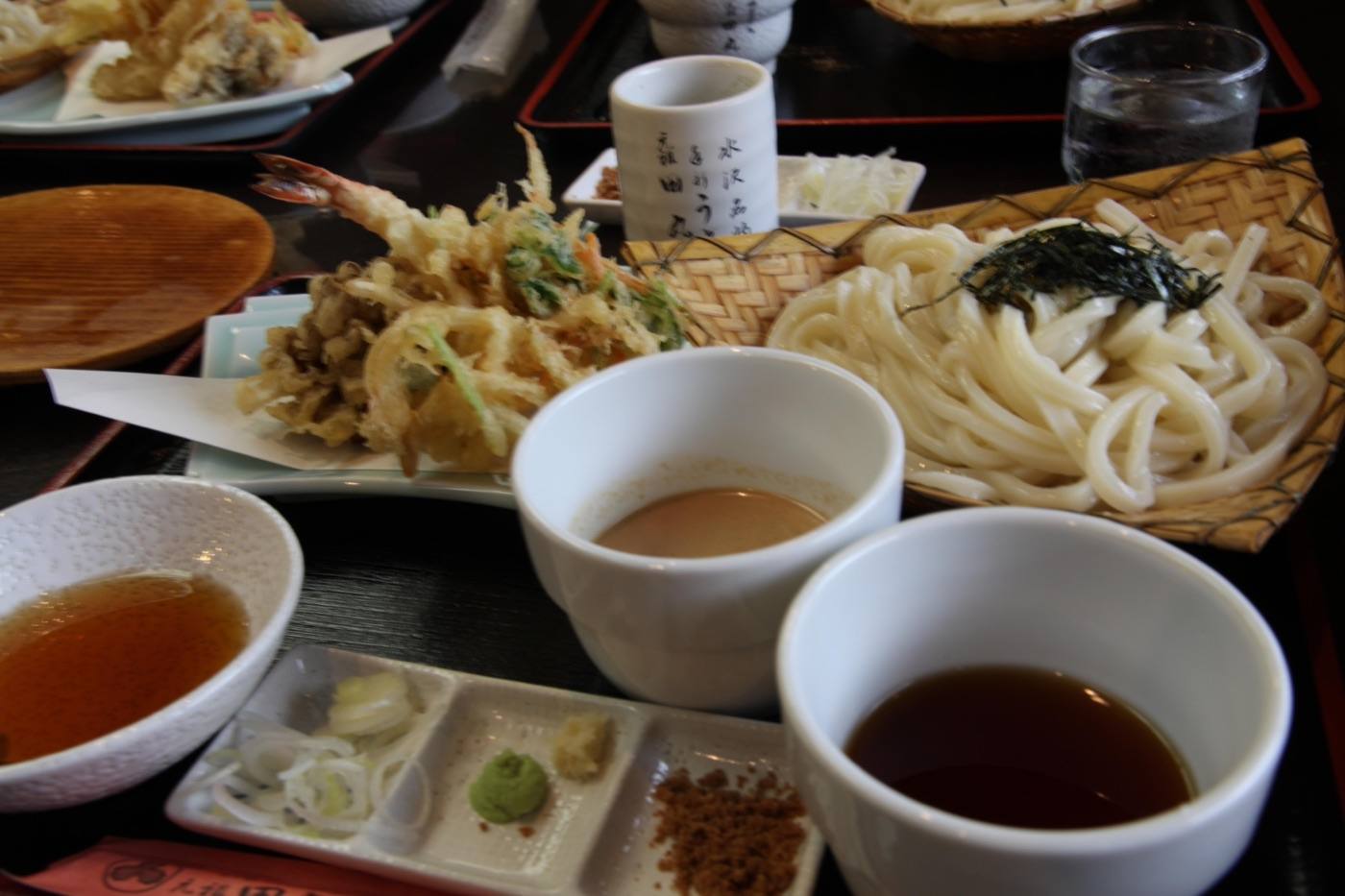
Thick chewy udon eaten cold with a dipping sauce, near Ikaho.

Plain steamed buns on a skewer, painted with sweet miso and grilled until it chars. Sold at festivals.
Most of Japan’s konnyaku is made here. Almost no calories, and a texture nothing else has.

Steamed bean-paste buns sold hot in the hot-spring towns. Eat one on the stone steps at Ikaho.
Small shops, no English sign outside, and worth the walk.
Cold udon served plain with a dipping sauce, on a road above the hot-spring town where thirteen shops sell the same dish. If this one has a queue, walk to the next.
Four plain steamed buns on a skewer, painted with sweet miso and grilled until the edges char. No filling inside. 240 yen a skewer.
Sold at Yokokawa station since 1958, when trains stopped here to add a second engine for the pass. The pot is real ceramic and people take it home.
Gunma grows most of Japan's konnyaku — a firm grey jelly made from a root, with almost no calories. You can watch it being made, then eat a dozen dishes of it for nothing.
Ikaho's spring water runs brown with iron, and in 1910 this shop coloured a bun to match it. Every hot spring town in Japan now sells a version. It stands where the stone steps end.
Kiryu was a weaving town. Its noodle, himokawa, is rolled out flat and wide instead of round, and comes to the table looking more like a sheet than a strand.
Kusatsu is a hot-spring town built around a channel of steaming water. This shop serves buckwheat noodles, and finishes the meal with sweet soba dumplings.
Horumon-age sounds like offal, but it is not. A butcher near the silk mill splits fish cake, batters it, fries it and dips it in sauce.
Numata spreads sweet miso on a soft bread roll. The shop opens at seven and closes only on New Year Day.
Ota is a town of yakisoba shops, and the city says each one differs — thick or thin noodles, sweet or salty sauce. This shop closes once it sells out.